
Do you ever wonder why some baked goods taste absolutely amazing, while others just fall flat? Often, the secret lies in one crucial ingredient: the chocolate. Many home bakers might not realize the huge impact that high-quality chocolate for baking can have on their final product. It is truly the star that makes brownies fudgy, cookies chewy, and ganaches silky smooth.
This comprehensive guide will help you understand the world of baking chocolate. We will explore different types, percentages, and how to choose the perfect one for your recipes. Get ready to transform your treats and bake like a true artisan, experiencing the difference that craft chocolate brings to every bite.
What is Chocolate for Baking? More Than Just a Sweet Treat
Chocolate made for baking is specially formulated. It contains higher amounts of cocoa solids and often less sugar than eating chocolate. This means it melts smoothly and delivers a more intense flavor. Knowing the basics helps you pick the best **chocolate for baking**.
Decoding Cacao Percentages: What Do They Really Mean for Your Bake?
You often see numbers like 60%, 70%, or even 100% on chocolate bars. This number tells you the percentage of cacao solids in the chocolate. Cacao solids include cocoa mass (which has cocoa butter and cocoa powder) and sometimes extra cocoa butter.
A higher percentage means a more intense, less sweet chocolate. A lower percentage means it is sweeter and milder. For example, a 70% dark chocolate will be more bitter and complex than a 50% dark chocolate. This choice dramatically affects the final taste of your baked goods.
Forms of Baking Chocolate: Bars, Chips, Callets, and More
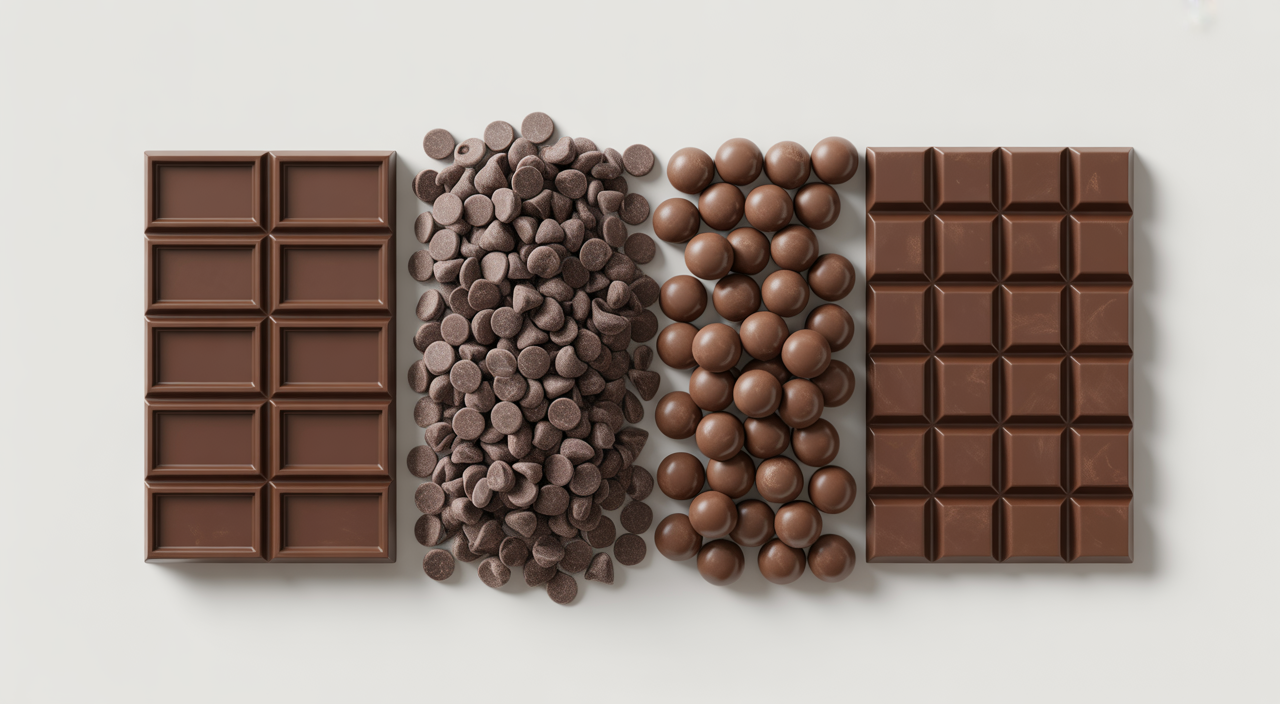
While **chocolate for baking** comes in several forms, each suited for different tasks:
- Bars are solid blocks that you chop yourself. This allows for uneven melting, which creates delicious pockets of chocolate in cookies.
- Chocolate chips are designed to hold their shape better when baked.
- Callets, often called wafers or discs, are small, uniform pieces. They melt very smoothly and are perfect for precise measurements or for making glossy glazes and ganaches.
You can find these high-quality forms in our online collection, ensuring you have the right ingredient for any baking need.
Demystifying the Spectrum: Choosing Your Perfect Chocolate for Baking
The world of **chocolate for baking** offers a wide range of options. Each type brings unique characteristics to your desserts. Understanding these differences is key to successful baking.
Unsweetened Chocolate: The Pure Cacao Powerhouse
Unsweetened chocolate is 100% pure cacao. It contains no added sugar. This type is very bitter and rich, perfect for controlling the sweetness in recipes. It adds deep chocolate flavor without making your dessert overly sweet. Use it in brownies or rich chocolate cakes where you want an intense, complex cocoa taste.
Bittersweet & Semi-Sweet Chocolate: Your Versatile Workhorses
Bittersweet chocolate usually has 60% to 80% cacao solids. Semi-sweet chocolate typically ranges from 35% to 55%. Both are versatile and often interchangeable in recipes. They are ideal for most cookies, brownies, and chocolate sauces, providing a balanced chocolate flavor that isn't too bitter or too sweet.
Milk Chocolate for Baking: For Creamy, Sweet Delights
Milk chocolate contains milk solids and more sugar, making it much sweeter and creamier. It's fantastic for recipes where you want a milder, sweeter chocolate flavor. When using milk chocolate, be extra careful not to scorch it. Its milk content makes it more delicate when melting.
White Chocolate: Beyond the Bean – A Sweet Canvas
White chocolate is unique because it doesn't contain any cocoa solids. It is made from cocoa butter, sugar, and milk solids. This gives it a creamy, sweet flavor. It is perfect for adding richness and a different kind of sweetness to desserts. Always choose a white chocolate made with real cocoa butter for the best flavor and texture.
Cocoa Powder: Dutch-Processed vs. Natural – The Flavor Difference
Cocoa powder is essentially pure cocoa solids with most of the cocoa butter removed. Natural cocoa powder is acidic and reacts with baking soda to create lift. Dutch-processed cocoa powder, on the other hand, is treated with an alkali to reduce its acidity. This gives it a darker color and a mellower flavor. Know which type your recipe calls for to ensure proper leavening and taste.
Matching Your Chocolate for Baking to Your Masterpiece
Choosing the right chocolate can elevate your baked goods from good to truly exceptional. Consider the final flavor and texture you want to achieve. This thoughtful selection makes a big difference.
Best Chocolate for Baking Perfect Brownies & Rich Cakes
For rich, fudgy brownies and deep chocolate cakes, a dark chocolate with 60-75% cacao is ideal. It provides intense flavor without excessive sweetness. This balance creates a complex and satisfying chocolate experience. Look for chocolates with deep, earthy notes to enhance the richness.
Ideal Chocolate for Baking Chewy Cookies & Melty Chips
When baking cookies, you want chocolate that melts beautifully but still holds some shape. Semi-sweet chocolate chips or chopped dark chocolate bars (50-65% cacao) work wonderfully. They offer a delightful melt and just the right amount of sweetness to complement the cookie dough. This combination ensures a perfect texture and taste in every bite.
The Perfect Chocolate for Baking Silky Ganaches & Decadent Sauces
For smooth, glossy ganaches and luxurious sauces, a high-quality couverture chocolate is best. Couverture chocolate has a higher cocoa butter content. This allows it to melt incredibly smoothly and harden with a beautiful shine. A 60-70% dark chocolate or a good quality milk chocolate will give you professional results, and you can explore our commitment to quality.
The Craft Chocolate Difference: Why Our Bean-to-Bar Quality Excels
Our brand takes pride in offering craft, bean-to-bar chocolate. This means we control the entire process from bean to finished bar. We source premium cacao beans from ethical farms. Then, we carefully roast, grind, and refine them ourselves. This meticulous process results in chocolate with superior flavor, aroma, and melting qualities. Our dedication to quality directly translates to unmatched taste and texture in your baked goods, reflecting our brand's broader mission.
Mastering Your Chocolate for Baking: Techniques & Troubleshooting
Even with the best chocolate, proper technique is essential. A few simple tips can help you avoid common baking mishaps. This ensures your chocolate performs perfectly every time.
Proper Melting Techniques: Gentle Heat for Smooth Results
Chocolate can be sensitive to heat. Always melt it gently. A double boiler is a great method, as it uses indirect heat. If using a microwave, melt in short bursts (15-30 seconds), stirring well between each. This prevents scorching and ensures a smooth, luscious texture. Be careful not to introduce any water, as it can cause the chocolate to seize.
Storing Your Baking Chocolate: Preserve Flavor & Quality
Store your chocolate in a cool, dry place, away from direct sunlight. An airtight container can protect it from absorbing odors. Avoid the refrigerator unless it's a very hot and humid climate. Extreme temperature changes can cause "sugar bloom" (a white, powdery film) or "fat bloom" (streaks or spots), which affect appearance but not usually flavor.
Common Mistakes to Avoid: From Seizing to Scorching
The most common mistakes to avoid include:
- Getting water into melted chocolate, which causes it to seize and become lumpy. Always use completely dry utensils and bowls.
- Overheating can scorch chocolate, making it grainy and bitter. Melt slowly and patiently. Don't be tempted to rush the process, especially with delicate milk or white chocolate.
Tempering Basics: Achieving a Perfect Snap & Shine
Tempering is the process of carefully melting and cooling chocolate. It stabilizes the cocoa butter crystals. This results in a shiny, smooth finish and a satisfying snap when broken. While it can seem daunting, basic tempering can be done at home for dipped treats or molded chocolates. It ensures your creations look as good as they taste.
Make Every Bake a Masterpiece with Premium Chocolate for Baking
The quality of your ingredients directly impacts the quality of your finished baked goods. By understanding and choosing premium chocolate, you're investing in richer flavors and better textures. Our brand is committed to providing you with the finest craft chocolate, made with passion and precision. This helps you create extraordinary treats every time.
Conclusion: Elevate Your Craft
You now have the knowledge to choose and use the best **chocolate for baking**. From understanding cacao percentages to mastering melting techniques, you are ready to enhance your baking. Remember, exceptional baking starts with exceptional ingredients. When you select our craft chocolate, you are choosing unparalleled quality and flavor.
Ready to transform your baking? Discover our full range of ethically sourced, bean-to-bar baking chocolates in our online pantry today. For custom orders or specific needs, feel free to contact us or visit our physical location for a personal experience. We love seeing what you create!
Frequently Asked Questions (FAQs)
What is the main difference between **chocolate for baking** and eating chocolate?
Baking chocolate usually has less sugar and a higher percentage of cacao solids than eating chocolate. This makes it more intense and less sweet. It is formulated to perform specifically in baked goods, providing deep flavor without making the dessert overly sweet. Eating chocolate is designed to be enjoyed on its own, with a smoother, sweeter profile.
Can I substitute different types of baking chocolate in a recipe?
Yes, you can often substitute similar types, but be mindful of the cacao percentage and sweetness. For example, bittersweet and semi-sweet chocolates are often interchangeable. However, swapping unsweetened chocolate for milk chocolate will drastically change the flavor and sweetness. Always consider how the change will impact your recipe's intended taste and texture.